

A community helpers theme gives preschoolers their first real look at how a neighborhood works. Children meet the firefighter, the mail carrier, and the garbage collector who keep daily life running.
The best community helper preschool activities go beyond worksheets and coloring pages. They let students handle real tools, act out real jobs, and practice skills in every corner of the preschool classroom.
This guide groups 18 activity ideas by learning area: circle time, literacy, math, dramatic play, sensory and fine motor, and gross motor. Each one uses supplies most classrooms already have.
Most also adapt easily for kindergarten.
Why a Community Helpers Theme Works in Preschool
Young children learn best when new ideas connect to their own lives. Few preschool themes connect as directly as community helpers. Every preschooler has waved at a bus driver, visited a doctor, or heard the garbage truck rumble past on trash day.
The theme also covers a wide range of skills at once. The Head Start Early Learning Outcomes Framework organizes early learning into five domains. These include language and literacy, cognition, and social and emotional development.
A single community helpers preschool unit can touch all five. It also fits the play-based, hands-on approach described in NAEYC’s resources on developmentally appropriate practice.
Community Helper Preschool Activities
Start with the community workers your students actually know. A class in a farm town may connect more with a veterinarian than a subway operator. Ask families what jobs they do and whether anyone could visit or send photos from work.
Pick four to six different community helpers instead of trying to cover them all. Firefighters, police officers, doctors, mail carriers, and garbage collectors are common choices.
Adding a grocery clerk, librarian, or bus driver keeps the theme close to daily life. Then slot two or three activities from the sections below into your lesson plans each day.
Circle Time Activities
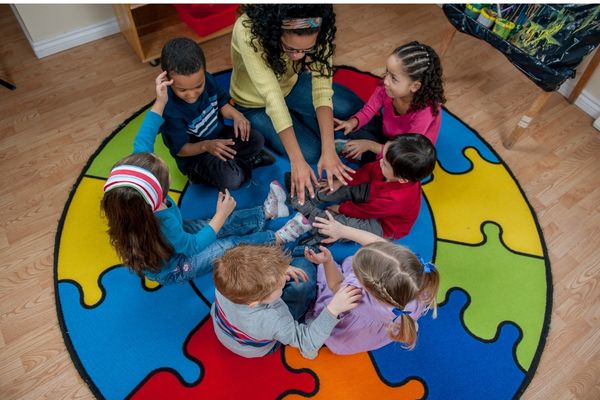
Circle time sets the tone for the whole community helper theme. Keep each activity short so little ones stay engaged.
Mystery Tool Bag
Fill a cloth bag with one real or toy tool for each helper, such as a stethoscope, a letter, a whistle, and a spatula. A child reaches in, feels the object, and guesses what it is before pulling it out.
The group then names which helper uses that tool. This builds vocabulary and gives quieter students a low-pressure way to speak up.
“Who Am I?” Clue Game
Read three short clues aloud, one at a time. For example: “I wear a helmet. I ride on a big red truck. I spray water with a hose.” Children raise a hand when they know the answer.
Later in the week, help preschoolers create their own clues for classmates to solve.
Neighborhood Helper Songs
Music helps young children remember new words. Many teachers open the theme with Sesame Street’s classic song “Who Are the People in Your Neighborhood?” You can also make up new verses to familiar tunes like “The Wheels on the Bus,” with one verse for each helper.
Literacy Activities
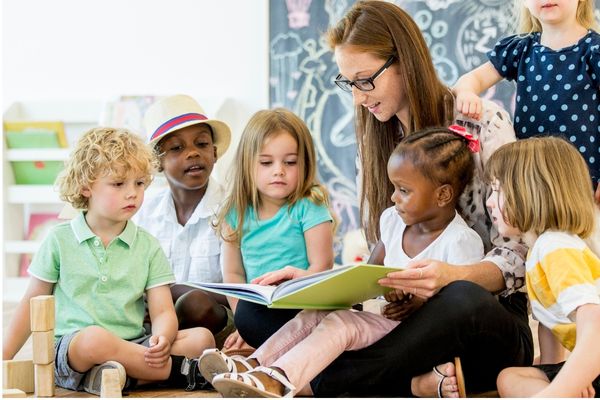
Literacy activities fit this theme naturally because nearly every job involves print.
Mail carriers read addresses, chefs read orders, and doctors read charts.
Community Helper Books
Read one book each day and keep a basket of community helper books in the library corner.
Strong read-aloud choices include Whose Hands Are These? by Miranda Paul, Trashy Town by Andrea Zimmerman and David Clemesha, and Officer Buckle and Gloria by Peggy Rathmann. Richard Scarry’s What Do People Do All Day? works well for small groups to explore together.
Mix in nonfiction so students see real workers alongside story characters.
Post Office Writing Center
Set up a table with envelopes, paper, stickers, and a shoebox mailbox. Children “write” letters to classmates or family members using drawings, scribbles, or the letters they know.
At the end of the day, a student mail carrier sorts and delivers the mail. This activity shows children that print carries a message someone else will read.
“Helpers I Know” Class Book
Ask each child to draw a community helper they have met in real life. Write their words beneath the drawing as they describe the person and what they do. Bind the pages into a class book and read it together.
Students love finding their own page, and the book stays in the library for rereading.
Math Activities
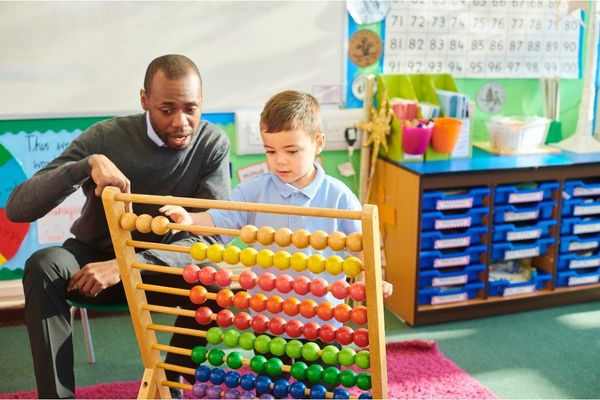
Math centers get a boost when numbers have a job to do. These activities give counting and measuring a real purpose.
Mail Carrier Counting
Number a set of envelopes from 1 to 10 and label small boxes or cubbies with matching numbers. Children deliver each letter to the correct “house.”
For older preschoolers and kindergarten students, put dot sets on the envelopes instead of numerals. They count the dots and match them to the right number.
Firefighter Hose Measuring
Cut yarn or rope into different lengths to act as fire hoses. Children line them up from shortest to longest or measure them with blocks. Ask which hose would reach a paper “fire” taped to the far wall.
Comparing lengths builds measurement words like long, longer, and longest.
Grocery Store Prices
Tape price tags of 1 to 5 cents onto empty food boxes. Children take turns as the cashier and the shopper, counting out play coins to pay. The activity blends counting with role play, so it doubles as a dramatic play extension.
For more hands-on number practice, try these domino games that teach early math.
Dramatic Play Center Ideas
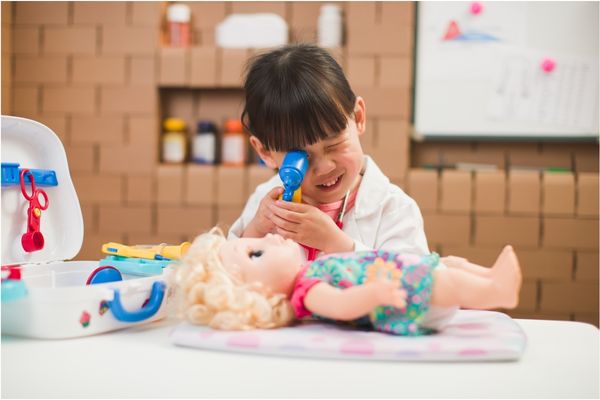
The dramatic play center is where the theme truly comes alive. Rotate your dramatic play centers every few days so students can try several roles. Add clipboards, notepads, and signs to every setup to build print into play.
Veterinary Clinic
Stock the area with stuffed animals, bandages, a toy stethoscope, and a sign-in sheet. Children take turns as the vet, the pet owner, and the receptionist. Encourage them to “write” notes about each patient on their clipboards.
Restaurant
Turn the kitchen area into a restaurant with aprons, order pads, and play food. Let children make their own menus by drawing favorite foods. One child takes orders while another cooks, which builds turn-taking and conversation skills.
Fire Station
Add rain boots, raincoats, a toy hose, and a cardboard box fire truck. Use this setup to introduce fire safety in a calm, positive way. The National Fire Protection Association’s Learn Not to Burn preschool program even opens with a lesson called “Firefighters are community helpers.”
Practice stop, drop, and roll, and explain that it is only for when clothes catch fire. Review these home fire safety tips from the NFPA before you teach the lesson.
Sensory & Fine Motor Activities
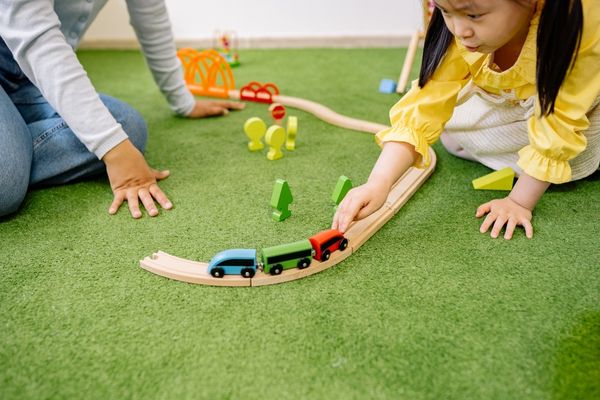
Sensory play keeps busy hands engaged while building the hand strength children need for writing. Supervise closely whenever small items are in use.
Garbage Collector Sensory Bin
Fill a bin with shredded paper, clean recycled containers, and toy trucks. Children sort the “trash” into small tubs labeled paper, plastic, and metal. This introduces the garbage collector’s job and early sorting skills at the same time.
For a mess-free version, seal similar items inside a few easy sensory bags.
Construction Site Dig
Bury toy trucks, cones, and small blocks in a tub of sand. Children dig them out with scoops and build roads like construction workers. A batch of homemade kinetic sand holds its shape well for building.
Play Dough Tool Mats
Draw simple outlines of helper tools, such as a hammer, a mail truck, or a doctor’s bag. Children roll and press play dough to fill each shape. Add craft sticks or plastic tools for cutting and stamping.
Squeezing and rolling dough strengthens the small hand muscles used to hold a pencil.
Road-Cutting Strips
Draw thick straight and zigzag lines on strips of gray or black paper. Children cut along the lines to make roads for toy cars. Start beginners on straight lines, then add curves as their scissor skills improve.
Tape the finished roads together to build a class town.
Gross Motor Activities
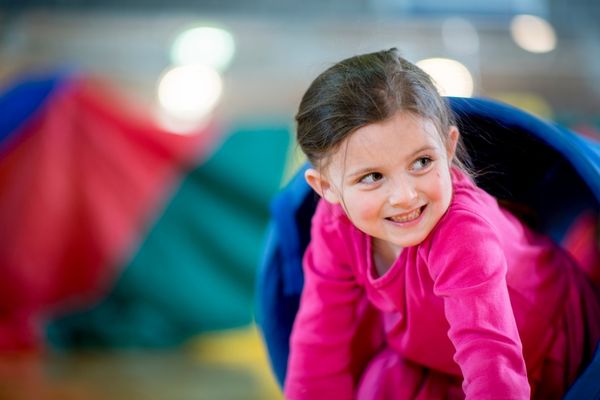
Big-body movement helps preschoolers burn energy while they learn. Both of these community helper activities work indoors or outside.
Crossing Guard Red Light, Green Light
Give one child a stop sign made from a paper plate and a craft stick. That “crossing guard” calls out red light and green light while classmates walk, stop, and go. The game builds listening skills and introduces basic street safety.
Firefighter Obstacle Course
Set up a course with a tunnel to crawl through, cones to weave around, and a paper ladder taped on the floor. Explain that firefighters teach people to stay low under smoke.
Children finish by “spraying” a paper fire taped to the wall.
Invite Real Community Workers to Your Classroom
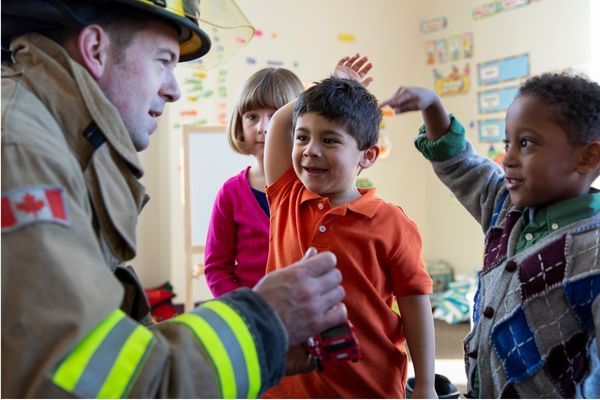
A real visitor makes the theme stick for young children. Many fire departments, police departments, and public libraries offer school visits or tours, so call ahead to schedule.
Before the visit, help students brainstorm two or three questions to ask.
If a visit isn’t possible, take a walking field trip around the school. Point out the mail truck, the crossing guard, and the custodian at work. Afterward, have children dictate a thank-you note to the helpers they met.
Round Out the Theme With Crafts and Printables
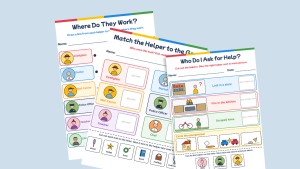
Hands-on centers should carry most of the unit, but crafts and printables round it out. These community helpers preschool crafts add ten art projects, and each preschool craft ties back to pretend play.
For quieter table time, these community helper worksheets offer six printable options. Use worksheets as a follow-up to play, not a replacement for it.
The strongest community helper theme mixes stories, play, movement, and real visitors. Pick a few ideas from each center, and your students will finish the unit knowing who keeps their community running and how they can help, too.
FAQs (Frequently Asked Questions)
How to teach community helpers to kindergarten?
Start with helpers kids already know, like the mail carrier, doctor, and firefighter. Read picture books, use dress-up costumes, and set up pretend-play stations. Invite a real helper to visit, or take a short walk to spot helpers nearby. Keep lessons short, hands-on, and tied to daily life.
What is the Community Helpers Guessing Game?
The Community Helpers Guessing Game is a simple clue game. One person describes a helper’s job, tools, or uniform without saying the name, like “I fight fires and ride a red truck.” Kids guess who it is. You can also use picture cards or props, or act it out charades-style. It builds vocabulary and listening skills.
What is the Community Helper Matching Game?
The Community Helper Matching Game asks kids to pair each helper with something that goes with their job. For example, match the doctor to a stethoscope, the chef to a whisk, or the mail carrier to a letter. It works with printable cards, a memory-style flip game, or real objects. It builds sorting and reasoning skills.
What are some activities for preschoolers about community helpers?
Try a pretend-play station, like a vet clinic with stuffed animals or a post office with envelopes. Kids can build a fire truck from a cardboard box, sort toy tools by job, or sing songs about helpers. Reading picture books and making thank-you cards for local helpers also work well.
Wrapping it Up
The best community helper preschool activities give children a chance to see, touch, and act out real jobs. A mystery tool bag sparks new vocabulary, and a post office center turns scribbles into messages.
A fire station in dramatic play makes safety lessons feel less scary. Together, these experiences help young children understand that their community is made of real people who care for them.
You don’t need to run every activity on this list. Choose one or two ideas from each learning area, and build them around the helpers your students already know.
By the end of the unit, your preschoolers will be able to name who keeps their neighborhood running. They’ll also start to see themselves as helpers, too.
