


Ask a room of four-year-olds who helps their town, and every hand goes up. Firefighters, doctors, mail carriers, and garbage collectors are real-life heroes to little ones, which makes them a perfect theme for hands-on art.
These community helpers preschool crafts use simple supplies, and each one connects to a job kids can act out afterward.
Below you’ll find 10 crafts with supplies and steps, plus tips for teachers planning a full unit and parents crafting at home. Every idea works with materials most classrooms already stock, and you won’t need a free template or a printer to start.
Why Community Helpers Crafts Work So Well for Young Kids
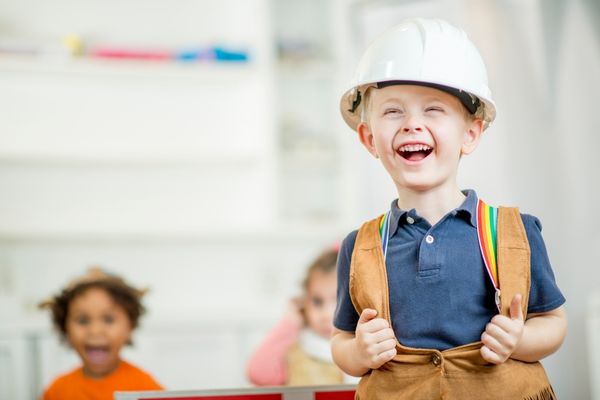
Every preschooler learns about the world by copying it. The CDC’s list of developmental milestones most kids reach by age 4 lines up closely with this theme. By that age, most kids pretend to be something else during play, like to be a helper, and can draw a person with three or more body parts.
A good helper craft touches all three skills in one preschool activity. Cutting, peeling, and gluing small pieces also strengthens the hand muscles kids need for writing. Many teachers pair art time with other hand-strengthening activities, like squeezing and molding homemade kinetic sand.
The biggest payoff comes once the craft is dry. A firefighter helmet or chef hat becomes a costume, and a costume invites dramatic play. Educators writing for NAEYC explain that dramatic play areas that support literacy development help kids expand their vocabulary and practice communication, so each finished craft keeps teaching long after art time ends.
What You’ll Need
Most of these ideas share the same short supply list. Stock these once, and you can run the whole theme without extra shopping trips:
- Construction paper or cardstock in red, yellow, blue, black, and white
- A glue stick for each kid, plus liquid school glue
- Kid-safe scissors
- Crayons and washable markers
- Lunch sacks, paper plates, and clean recycled boxes
- Aluminum foil, cotton balls, and adhesive bandages
Safety matters in every arts and crafts session. The Art and Creative Materials Institute recommends that kids in sixth grade and younger use only products carrying its AP Seal for classroom art materials. That seal means a toxicologist evaluated the product and found it non-toxic when used as intended.
10 Easy Community Helpers Crafts for Preschool
Each craft below includes what you need, how to make it, and a quick way to connect it to the helper’s real job. Pick one helper per day, or let kids choose their favorites.
1. Firefighter Helmet Hat
Supplies: red and yellow cardstock, a glue stick, a stapler for the adult
Draw a wide dome with a brim on red cardstock and cut it out for younger kids. Older kids can cut along the line themselves. Kids add a yellow shield to the front, write a station number on it, and an adult staples the helmet to a headband strip sized to each head.
While kids wear their hats, talk about why firefighters wear heavy gear. Then practice “stop, drop, and roll” together.
2. Community Helper Puppets
Supplies: brown lunch sacks, cardstock scraps, drawing tools, glue
The folded bottom flap of a lunch sack becomes the puppet’s face. Kids draw eyes and a mouth, then add uniform pieces: a blue shirt and star for a police officer, a white coat for a doctor, or a tall white hat for a chef.
Once the puppets dry, hold a short puppet show. Each kid answers one question: “What does your helper do all day?” It’s a fun way to build speaking skills without putting anyone on the spot.
3. Mail Carrier Envelope & Mailbox
Supplies: a shoebox, blue cardstock, sheets of plain drawing stock, washable markers
Cover a shoebox in blue cardstock and cut a slot in the lid to make a class mailbox. Kids fold a drawing sheet in half, seal the sides, and design their own stamp in the top corner. They can “write” a name on the front, even if it’s still scribble writing.
Assign a daily mail carrier who delivers letters to classmates’ cubbies. This craft quietly teaches name recognition, letters, and the idea that every home has an address.
4. Doctor’s Bandage Buddy
Supplies: white paper or cardstock, crayons, adhesive bandages
Kids draw a person on the white sheet, then stick real bandages wherever their “patient” got hurt. This lines up well with the age-4 drawing milestone, and peeling bandage backs is great fine motor practice.
Ask each kid to explain how their patient got hurt and how the doctor or nurse will help. Keep a few extra bandages in the dramatic play area for a pretend clinic.
5. Construction Worker Shape Truck
Supplies: precut shapes in yellow and black, glue, a background sheet
Give each kid a set of shapes: one large rectangle, one square, one triangle, and two circles. Kids arrange the shapes into a dump truck, stick them down, and name each shape as they go. Count the wheels together before everything dries.
Builders use math every day, so this craft opens the door to talking about measuring and building.
Psst! If your class loves stacking and sorting, keep the momentum going with ideas for teaching math with Legos.
6. Police Officer Star Badge
Supplies: cereal box cardboard, aluminum foil, a black marker, masking tape
Trace a star onto cereal box cardboard and cut it out ahead of time. Kids wrap the star in foil, smooth it with their fingers, and write their initial in the center. A rolled sticky loop on the back attaches the badge to a shirt without pins.
Use badge time to discuss safety. Practice what kids should say if they get lost: their name and a grown-up’s name.
7. Chef Hat
Supplies: a white cardstock band, white tissue or coffee filters, glue
Size a cardstock band to fit each head. Kids scrunch white tissue or coffee filters into puffy balls and attach them along the top edge until the hat looks tall and fluffy. It’s a fun craft with almost no cutting.
Chef hats pair perfectly with a pretend restaurant. Kids can take orders, “cook” with play food, and draw menus, which sneaks in early writing practice.
8. Recycled Box Garbage Truck
Supplies: a small empty box, green cardstock, bottle caps, school glue, torn scraps
Wrap a tissue or cereal box in green cardstock and attach bottle caps for wheels. Cut the top open so the truck can hold a load. Kids tear old scraps into small bits of “trash” and fill their truck.
Sanitation crews are important community helpers, and they play an important role kids see every week. Turn it into a sorting activity: which items belong in the trash, and which belong in recycling?
9. Veterinarian Pet Plate
Supplies: plates, cotton balls, cardstock ears, bandages
Kids turn a plate into a dog or cat face by adding ears and cotton ball fur, then drawing eyes and a nose. Add a bandage to a paw or ear so the pet is ready for a checkup.
Set up a vet station with a toy stethoscope and a clipboard. Kids take turns being the vet and the worried pet owner, which builds empathy along with vocabulary.
10. Community Helpers Town Mural
Supplies: a long roll of butcher paper, drawing tools, finished crafts
Lay a long sheet on the floor and use masking tape to make roads. Kids draw important buildings along the roads: a fire station, hospital, post office, school, and grocery store. Then they place their finished puppets, badges, and trucks where each helper works.
This group preschool craft makes a great end-of-week finale. It shows kids that different community helpers work together to keep one town running.
How to Plan a Community Helpers Unit
A preschool classroom can stretch this theme across one or two weeks without repeating a single activity. Each teacher can adjust the pace to fit the group.
A simple rhythm works well: read a picture book about the day’s helper, make the craft, then move the finished pieces into the dramatic play center. Round out each day with one or two related activities, such as a song or a sorting game.
Try a daily plan of activities like this:
- Monday: Firefighters (helmet hat)
- Tuesday: Doctors and nurses (bandage buddy)
- Wednesday: Mail carriers (envelope and mailbox)
- Thursday: Construction workers and sanitation workers (shape truck or garbage truck)
- Friday: The whole town (mural)
Invite a guest if you can. Community workers such as a nurse, baker, or mechanic can bring a tool or uniform for students to see up close. You can also call your local fire station and ask whether it offers classroom visits or tours.
Add problem-solving questions to each day. Ask, “What if the fire truck got a flat tire?” or “What if the mail carrier had too many letters?” These prompts work like the flexible thinking activities for preschoolers that help kids handle surprises and change plans.
Printables and templates can save prep time for large classes. Choose printables that leave open space for kids’ own drawings, so the finished work reflects their creativity instead of looking identical. The best resources support learning without doing the thinking for kids.
Making Community Helper Crafts at Home
Parents don’t need a classroom supply closet or printables to enjoy this theme. Check the recycling bin first, since cereal boxes, bottle caps, and shoeboxes cover several crafts on this list.
Start with helpers your kids already see. Watch for the garbage truck on pickup day, wave to the mail carrier, and point out the fire station on your drive.
Then make that helper’s craft the same afternoon while the memory is fresh, and turn the rest of the day into related activities like a neighborhood walk or a pretend post office.
Keep sessions short and follow your kids’ interests. If they want to make three firefighter helmets and skip the chef hat, that’s fine. The goal is play and conversation, not a perfect finished product.
Adjusting Crafts for Different Ages
Every craft here can scale up or down with small changes, which keeps activities fair for mixed-age groups. Three-year-olds do best with precut pieces, glue sticks, and stickers. Let each child set the pace. Four-year-olds can cut straight lines, draw faces, and add their own details.
Kindergarten kids are ready for more independence, so these ideas also work as kindergarten activities. Let them cut curves, trace their own templates, and write labels like “FIRE” or “MAIL” on their work.
Some kids dislike sticky textures on their hands. Offer glue sticks instead of liquid glue, and let sensory-sensitive kids explore materials first with easy sensory bags before jumping into a messy project.
FAQs (Frequently Asked Questions)
How to teach preschoolers about community helpers?
Start with the helpers kids already know from daily life, like their doctor or the mail carrier. Read a short book, talk about the helper’s tools, then make a craft kids can use in pretend play. Hands-on learning activities give kids a concrete way to remember what each helper does.
Can you give me five examples of community helpers?
Five common community helpers are firefighters, who put out fires and rescue people; doctors, who treat illness and injuries; mail carriers, who deliver letters and packages; police officers, who keep neighborhoods safe; and sanitation workers, who collect trash and recycling. Each one does a job that keeps the town healthy and running.
Who was a famous community helper?
Benjamin Franklin is one of history’s most famous community helpers. In 1736, he started the Union Fire Company, a volunteer firefighting group in Philadelphia. In 1775, the Continental Congress named him the first Postmaster General, and he organized mail delivery across the colonies. Clara Barton, who founded the American Red Cross in 1881, is another great example.
What ages are these crafts best for?
Most of these ideas suit ages 3 to 6. Adults handle cutting and stapling for younger kids, while kindergarten students can complete most steps on their own. Many of the same activities also work well in mixed-age homeschool or daycare groups.
Wrapping it Up
Community helpers crafts do more than fill an afternoon. A cardstock helmet or a lunch sack puppet gives kids a way to practice fine motor skills, learn new words, and step into someone else’s shoes.
Once the craft is done, it becomes a prop for pretend play, which keeps the learning going.
Start with one helper your kids already know, like the mail carrier or their doctor. Let them lead the play, ask questions, and add their own ideas. By the end of the theme, they’ll see their town as a place full of people who help each other!
