



A daily routine chart shows kids, step by step, what happens next. When each step is a picture instead of a written instruction, even kids who can’t read yet can follow along on their own. That means fewer reminders from you and more independence for them.
Visual routine charts can be especially helpful for young children, kids who struggle with transitions, and neurodivergent kids who do better when they know what to expect.
Here are 8 visual daily routine charts for kids, covering the day from morning to bedtime!
How to Make a Daily Routine Chart Work
- Keep it short. Each chart should show only the steps for one part of the day.
- Use a picture for every step. Photos of your own child doing each step work well for younger kids.
- Put the steps in the order they actually happen in your home.
- Hang each chart where the routine takes place, like the bathroom mirror, the bedroom door, or by the front door.
- Let kids mark each step as done, with a check mark, a magnet, or by flipping a card.
1. Morning Routine Chart
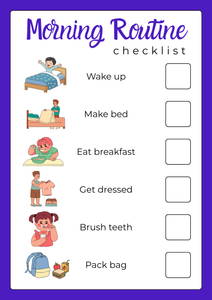
The steps from waking up to walking out the door: use the bathroom, get dressed, eat breakfast, brush teeth, brush hair, and put on shoes. When kids can see the whole morning laid out, there’s less stopping to ask what’s next, and less of you repeating yourself.
Best for: school and daycare mornings that tend to run late.
2. After-School Routine Chart
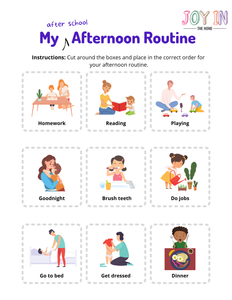
The steps for coming home: shoes and coat away, backpack unpacked, lunchbox to the kitchen, snack, homework, then free time. After-school hours are easy to lose to screens, and this chart gives them a simple structure.
Best for: school-age kids, and the stretch between pickup and dinner.
3. Bedtime Routine Chart
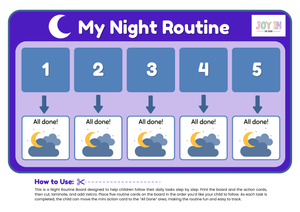
The steps from dinner to lights out: bath, pajamas, brush teeth, use the bathroom, read a book, and lights out. Doing the same steps in the same order every night helps kids know bedtime is coming, which can mean less stalling.
Best for: kids who push back on bedtime or ask for one more thing every night.
4. Mealtime Routine Chart
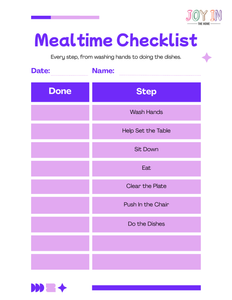
The steps around a meal: wash hands, help set the table, sit down, eat, clear the plate, and push in the chair, do the dishes. It gives kids clear jobs before and after eating, not just during.
Best for: toddlers and preschoolers learning mealtime expectations.
5. Bath and Hygiene Routine Chart
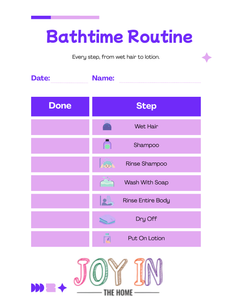
A step-by-step chart for bath or shower time: wet hair, shampoo, rinse, wash with soap, rinse, dry off, and put on lotion. Breaking hygiene into small pictured steps helps kids learn to do it on their own.
Best for: kids who are starting to bathe or shower independently.
6. Weekend and No-School Day Routine Chart
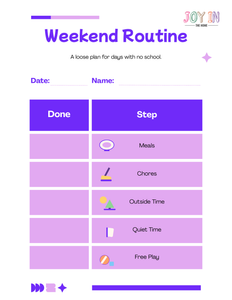
A looser chart with a few anchors for the day, like meals, chores, outside time, quiet time, and free play. It keeps some structure without scheduling every minute.
Best for: kids who find unstructured days hard, and for summer break.
7. Toddler Daily Routine Chart
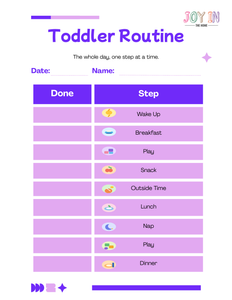
The whole day in one strip of pictures: wake up, breakfast, play, snack, outside time, lunch, nap, play, dinner, bath, and bed. Toddlers can’t tell time yet, but they can point to the picture of what comes next.
Best for: ages 1 to 3, and anyone caring for a toddler, like grandparents or babysitters, who needs to know the routine.
8. Getting-Out-the-Door Routine Chart
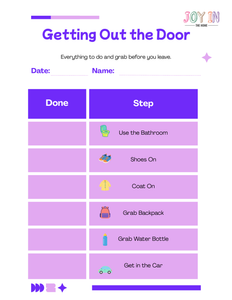
A short chart for leaving the house: use the bathroom, shoes on, coat on, backpack, water bottle, and into the car. Hang it right by the door where it’s needed.
Best for: any family that runs late leaving the house (which is most of us, let’s be real).
Turning a Daily Routine Chart Into a Habit
For the first week or so, walk through the chart with your child, pointing to each step as you go. Then gradually step back and let the chart do the reminding. When a step gets skipped, point to the chart instead of repeating the instruction.
Over time, many kids start the routine without being asked.
