


Chores get complicated fast when you have more than one child. Someone always thinks their job is harder, someone else forgot, and you end up refereeing instead of getting help.
These 12 family chore chart ideas are built for multiple kids, with systems that keep chores fair, visible, and easy to rotate!
Fair Doesn’t Mean Identical
Before choosing a system, decide what fair means in your house. A 4-year-old and a 12-year-old shouldn’t have the same chores.
Fair usually means each child has chores that match their age and ability, and that everyone’s jobs take a similar amount of effort for them.
Explaining that up front heads off a lot of arguments.
1. Color-Coded Chore Chart

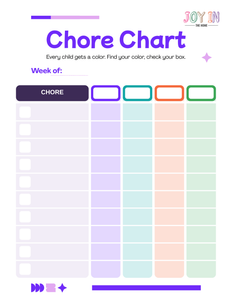
Give each child their own color and use it everywhere on the chart: their column, their magnets, their marker. Kids who can’t read yet can still find their own chores, and you can see at a glance whose jobs are done.
Best for: families with young kids or a wide age range.
2. Chore Wheel
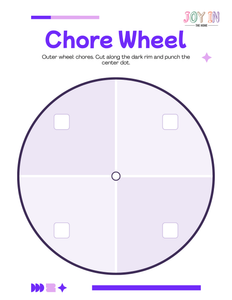
Two circles stacked on top of each other: chores on the outer circle and kids’ names on the inner one. Turn the inner wheel once a week, and everyone lines up with a new set of chores.
The rotation is built in, so no one has to remember whose turn it is.
Best for: siblings close in age who can do the same chores.
3. Chore Sticks or a Job Jar
Write each chore on a craft stick or slip of paper and put them all in a jar. Each child draws a set number of chores. Add a few fun sticks, like picking the music to clean to, to keep it interesting.
Best for: kids who like a little surprise, and weekend cleanups.
4. Zone Chore Chart
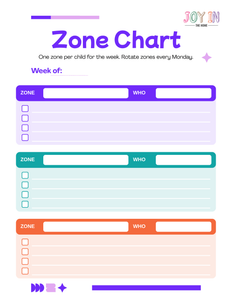
Divide the house into zones, like the kitchen, living room, bathroom, and entryway. Each child is in charge of one zone for the week, then zones rotate. Kids get to own an area instead of doing scattered tasks all over the house.
Best for: school-age kids and teens who can handle a whole area on their own.
5. Magnetic Chore Board
A magnetic whiteboard with a to-do column and a done column for each child. Each chore is a magnet, and kids slide it over when they finish. It’s satisfying to move, and it’s easy to swap chores without reprinting anything.
Best for: kids who like hands-on, visual progress.
6. Pocket Chart with Chore Cards
A hanging pocket chart with one pocket for each child. Chore cards go in each pocket, and kids flip a card over or move it to a done pocket when they finish. Cards can have pictures for younger kids and words for older ones.
Best for: families who want a system that’s easy to change every day.
7. Chore Chart by Age Level
Everyone works in the same area, but the job is scaled to each child’s age. In the kitchen after dinner, a preschooler wipes the table, a 7-year-old clears the dishes, and a 12-year-old loads the dishwasher. Everyone pitches in at the same time, and no one gets a job they can’t handle.
Best for: families with a big age gap between kids.
8. Points-Based Family Chore Board
Every chore has a point value, with harder chores worth more. Each child needs to reach a set number of points each day or week, and they choose which chores to do to get there. Kids who want the harder chores can finish faster.
Best for: kids ages 7 and up who like having a say in their chores.
9. Buddy Chore Chart
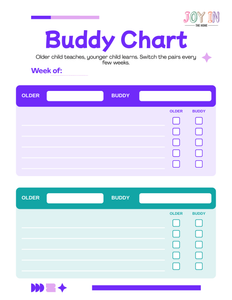
Pair an older child with a younger one and give each pair a set of chores to do together. The older child helps teach, and the younger one learns by working alongside them. Switch up the pairs every so often.
Best for: families with three or more kids, and siblings who get along better with a shared goal.
10. Chore Draft
Once a week, kids take turns picking chores from the list until every chore is taken. The pick order rotates each week, so everyone gets a turn to choose first. Letting kids choose tends to mean less complaining about what they end up with.
Best for: older kids who argue about fairness.
11. Clothespin Chore Chart
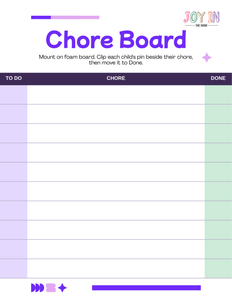
Chores are listed on a board or poster, and each child has clothespins with their name on them. Clip each child’s clothespins next to their chores, and they move each one to the done side when they finish. It’s inexpensive and simple to rearrange.
Best for: families who want a low-cost, hands-on system.
12. Family Meeting Chore Board
Chores for the coming week are decided together at a short weekly family meeting and written on a shared board. Kids get a say in who does what, and any complaints about last week’s chores can be talked through before they turn into arguments.
Best for: families who want kids involved in how the house runs.
You Might Also Like…
8 Visual Daily Routine Charts for Kids (Morning to Bedtime)
Tips for Using Family Chore Chart Ideas with Multiple Kids
- Put the chart in a shared spot everyone passes, like the kitchen.
- Rotate chores regularly so no one feels stuck with the worst job.
- Give each child at least one chore they actually like.
- Avoid comparing one child’s chores to another’s out loud.
- Keep one or two chores that everyone does together, like a 10-minute tidy before dinner.
FAQS (Frequently Asked Questions)
What is the best chore chart for a family?
There isn’t one best chart. The right one matches your kids’ ages. Color-coded columns work when kids can’t read yet, since each child follows their own color. A chore wheel handles rotation for you. Zone charts suit older kids who can own a whole room. Pick the format your family will actually keep using.
What are 10 common household chores?
Most families rotate the same ten: making beds, clearing the table, loading or unloading the dishwasher, wiping counters, taking out trash, sorting laundry, folding and putting away clothes, vacuuming or sweeping, tidying a shared room, and feeding pets. Nearly all of them can be split between an older and younger child.
How do I create a chore schedule for my family?
Start by listing every job that actually has to get done in a week, not the ideal list. Assign by ability, not age alone. Decide how often it rotates. Weekly is easiest to remember. Then put it somewhere visible. A schedule nobody can see stops working by Wednesday.
What chores should kids do by age?
Toddlers can put toys in a bin and carry laundry. Preschoolers match socks, feed pets, and wipe spills. Early elementary kids make beds, set the table, and sort recycling. By nine or ten, most can vacuum, load the dishwasher, and fold their own clothes. Teens handle full rooms, meals, and their own laundry.

